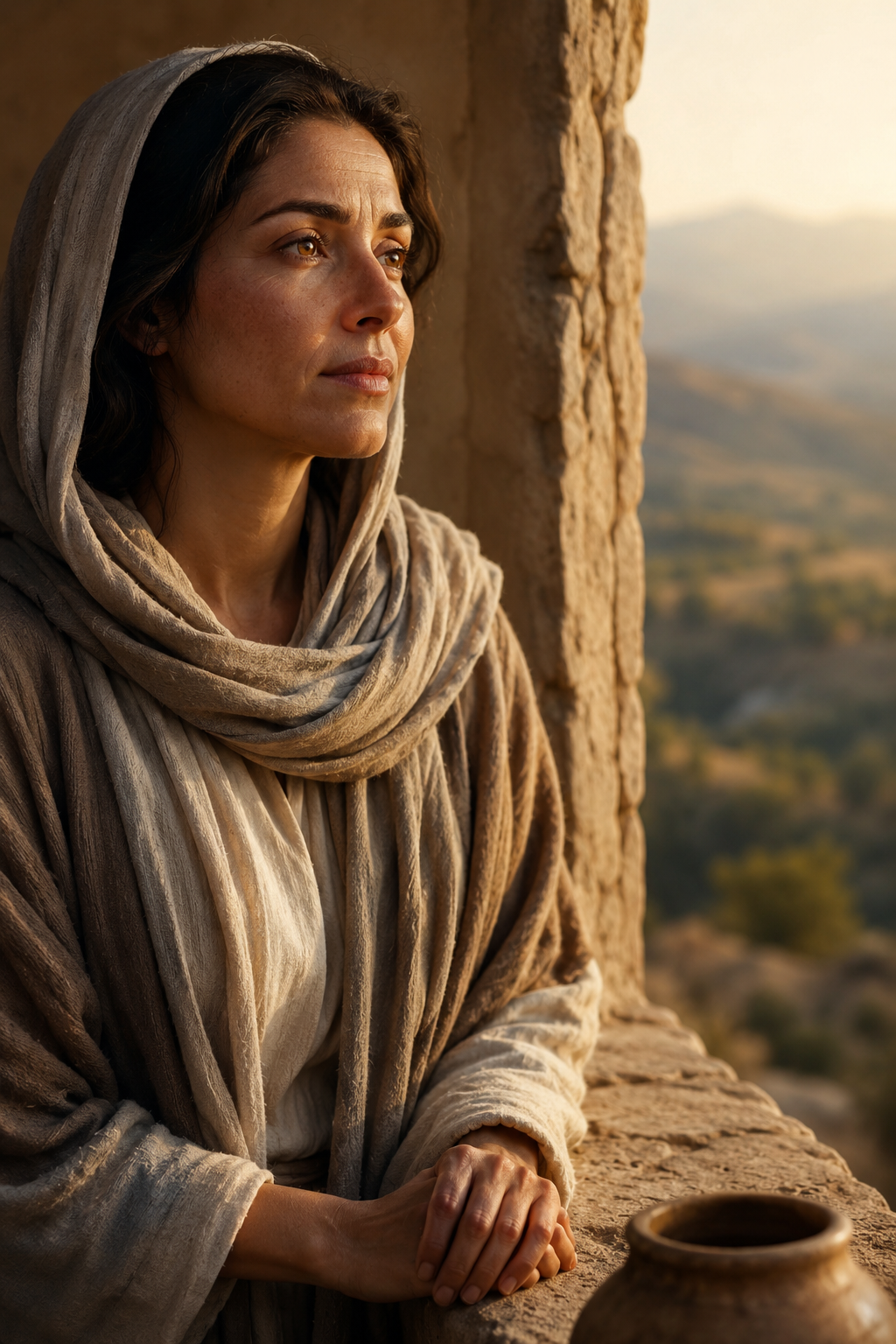
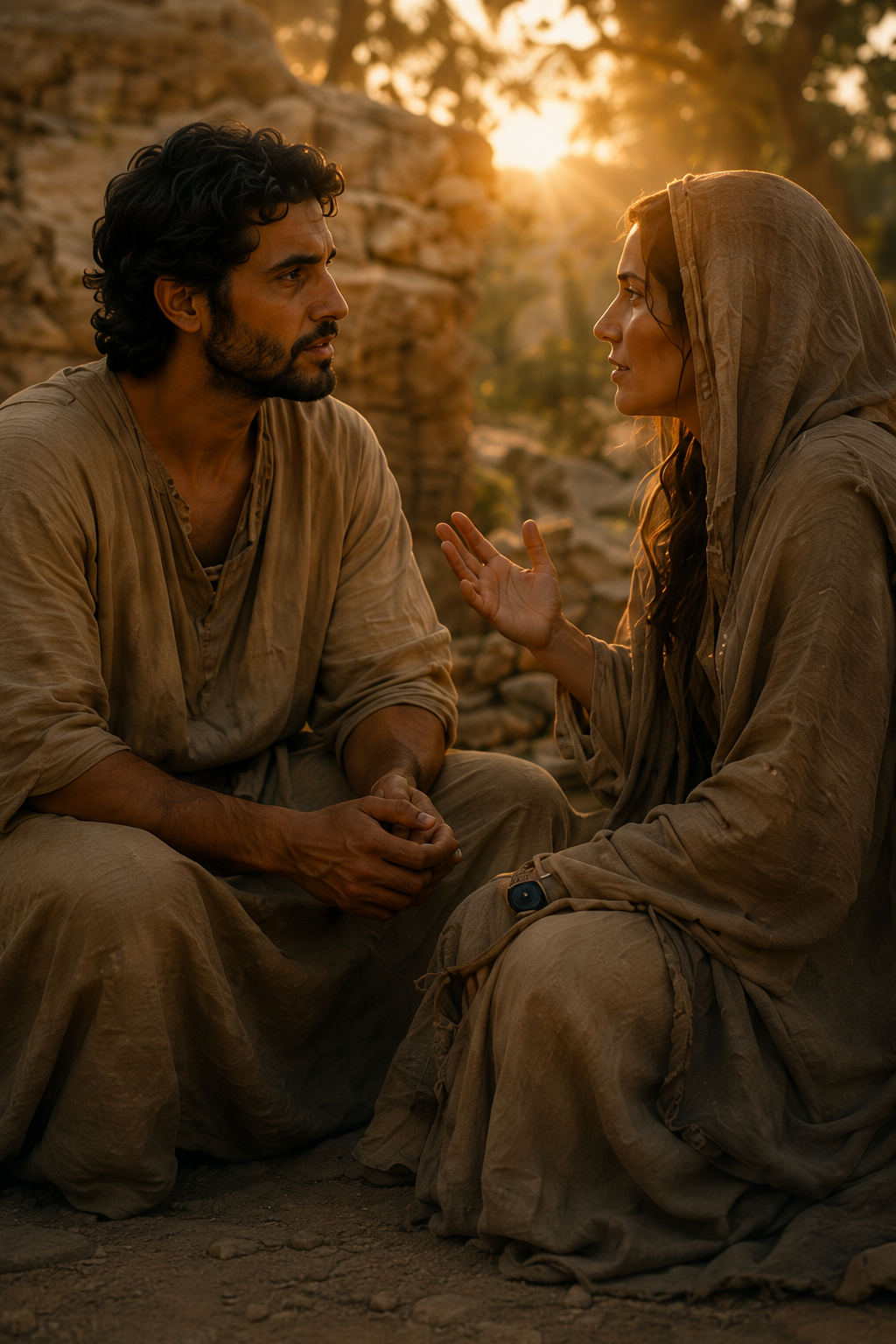
A study does not always begin with an answer. Sometimes, it begins with a question asked in the valley.
For many years, I lived an intense journey in the corporate world. Years of leadership, decision-making, responsibility, pressure, targets — often harsh environments and, at many points, predominantly male ones. I learned a lot. I grew a lot. I was shaped in difficult places.
But I also reached a point where I realized that journey had left its marks. They were not only achievements. There was tiredness. There was wear. There was the feeling of having carried many roles for a very long time: woman, professional, leader, mother, wife, person of faith. Someone who had to deliver, decide, care, produce, welcome, lead — and, so often, keep going even when there was not much strength left inside.
A woman's journey is not heavy only because of what she does. It is heavy because of everything she carries while she does it.
After many years in that environment came a career transition: I was leaving a corporate structure to begin an entrepreneurial journey. And every external transition ends up revealing an internal one as well. I began asking myself: what have I learned? What do I want to take with me? What do I no longer want to repeat? Who am I now?
Along with that transition came one of the greatest personal challenges I have ever faced as a woman: perimenopause. And I do not speak of it in theory. I speak of body. Of mind. Of the ground shifting. Of waking up and no longer recognizing my own energy. Symptoms that, at first, I could not even name — extreme fatigue, swings, a foggy mind, a body that would not respond.
In the beginning, it was easier to look at my story and say: "It's stress." "It's burnout." "You lived under pressure for years." And yes, there was tiredness. Yes, there was overload. But there were also hormonal issues that few people understood. There was low iron. There was a body crying out for help in a language no one around me seemed to speak.
It was in that place — tired, in transition, not fully understanding what was happening to me — that I prayed. It was not an elaborate prayer. It was almost a lament:
"Lord, why is the woman, once again, in this struggle?"
I thought God would answer me by speaking about me. About my season, my body, my exhaustion. But the answer came another way. He took me to Genesis. To the beginning. To before the pain.
And there the question that carries this entire study was born:
"Who did You have in mind, Lord, when You created woman?"
A note before we continue: this study was originally written in Portuguese, where it compares two Portuguese Bible translations. In this English version, Scripture quotations generally follow the wording of widely used English translations such as the NIV. Occasionally, I will compare renderings when the nuance helps us see the biblical idea more clearly — you do not need to know any particular translation to follow along.
Contents
The path of this reading
Before the pain, there was a design.Part 1 · Creation
Before the pain, the design
This study begins with a difficult text. Genesis 3:16 speaks of pain, of desire and of rule. We read that the woman's desire would be for her husband, and that he would rule over her: "Your desire will be for your husband, and he will rule over you."
It is a text that speaks of pain — and that, for a long time, was also used to justify pain. That is why it is essential to say, from the very start: Genesis 3:16 does not reveal God's original design for woman. Genesis 3:16 reveals the consequence of the fall. It is not the design; it is the distortion. It is not the original order; it is what sin produced.
"Before we understand the pain, we need to return to the design."
Before we look at the distortion, we need to contemplate the intention. Before we ask what happened to woman after sin, we need to ask: who was woman before the fall? And perhaps the deeper question is: what was God revealing about Himself when He designed woman?
The beginning gives us the first answer. In Genesis 1:26-27, God creates humanity in His image — "male and female he created them". Woman does not enter the story as a detail. She enters as a bearer of the image of God, with the same dignity of origin. She was not an improvisation. She was not a lesser idea. She was not an assistant hired to solve a domestic need.
Man and woman: the same image, the same dignity of origin.
To reflect
When you think about the creation of woman, do you start with Genesis 3 — the pain — or with Genesis 1 and 2 — the design? The order in which we read changes everything we understand.
Part 1 · Creation
The first "not good"
Genesis 2:18
"It is not good for the man to be alone. I will make a helper suitable for him."
Throughout Genesis 1, everything God makes receives the same evaluation: "and God saw that it was good". Creation advances from approval to approval — until, for the first time, something is declared not good.
"The first thing God calls 'not good' in the Bible is not sin. It is loneliness."
This changes how we read the whole scene. The problem woman comes to solve is not a shortage of labor. It is loneliness. And notice how God responds: He does not solve it by creating more work, more animals or more tasks. He solves it by creating a person.
God's answer to loneliness was not productivity. It was relationship. It was not performance. It was presence. It was not function. It was communion. Woman enters the narrative as the answer to the first "not good" God ever declared — the corresponding help that turns loneliness into communion.
The first "not good" was loneliness.
Part 1 · Creation
Ezer Kenegdo: the word we need to recover
When God announces the creation of woman, the Hebrew uses an expression that many translations have impoverished: Ezer Kenegdo. Where we read "a helper suitable for him", the original text carries two words of enormous density.
עֵזֶר
Ezer
Help, rescue, indispensable aid. A word the Bible uses many times to speak of God Himself — the God who rescues Israel, who upholds David, who comes to the help of His people. "My help comes from the LORD" (Psalm 121:2) uses exactly this root.
כְּנֶגְדּוֹ
Kenegdo
Facing him. Face to face. Corresponding, equal to, able to respond. Not behind, to follow. Not below, to serve in silence. Not above, to dominate. Facing — in the place of communion, dialogue and covenant.
This is decisive: Ezer is not a word of inferiority. It appears in the Scriptures describing the help of God Himself — in Exodus 18:4, in Deuteronomy 33:26 and 29, in Psalms 33, 70 and 121. When God calls woman Ezer, He places within creation a visible mark of a divine attribute: the God who helps.
"Ezer is not an inferior assistant. Ezer is indispensable help."
And Kenegdo completes the picture. Woman is not created from the man's feet, to be trampled. Nor is she created from his head, to dominate. The classic interpreters remind us that she is formed from his side — from close to his heart, as one who walks beside him. But the Hebrew goes even deeper: she stands facing him. Capable of communion. Capable of response. Capable of dialogue. Capable of presence.
Woman is not an echo; she is a voice. She is not an accessory; she is a correspondence.
"Woman was not created to be a shadow. She was created to be a presence."
Ezer is not inferiority. It is help.
"Bone of my bones"
When Adam sees her, his response is the first recorded human speech in the Bible — and it is poetry: "This is now bone of my bones and flesh of my flesh" (Genesis 2:23). He does not say "this is my property", nor "this is my servant". He says: this one is of my very substance. This one corresponds to me. There is wonder, recognition, covenant. The first human word in the Bible is a word about encounter.
And the chapter closes with a scene of complete transparency: "they were both naked, and they felt no shame" (Genesis 2:25). Before the fall there was difference without domination, vulnerability without shame, intimacy without manipulation, relationship without rivalry. That is the beauty of Eden. That is the design.
Transparency without fear. Difference without domination. That is the design.
To reflect
If Ezer is a word used for God Himself, what changes in the way you see the strength, the voice and the presence of the women God has placed in your life?
Part 2 · Fall
The fall: when the design was distorted
Genesis 3 must be read with care. Too often this chapter — and especially verse 16 — has been treated as if it were an ideal model for relationships. But it is not. It describes a rupture. And the rupture happens in a sequence we still recognize today.
The serpent distorts the voice of God
The fall begins with a question: "Did God really say...?" (Genesis 3:1). The serpent's first strategy is to cast doubt on the word of God. And that is still happening: every time a woman receives an identity smaller than the one God gave her, the same question echoes. Is that really what God said about you? Is that really what God designed when He created Ezer Kenegdo? Many of women's wounds did not begin in God — they began in the distortions of what was said in His name.
"Did God really say...?" — the fall begins when the voice of God is distorted.
Shame enters
Their eyes are opened, and the first consequence is shame (Genesis 3:7). Before, nakedness without fear; now, exposure with hiding. The body becomes a place of shame. Difference becomes a place of threat. The relationship becomes marked by defensiveness.
Accusation enters
Before God, Adam points his finger: "The woman you put here with me — she gave me some fruit from the tree" (Genesis 3:12). The same woman who was once received as "bone of my bones" is now blamed. Before, poetry; after, accusation. Before, communion; after, the shifting of guilt. And notice: the one God gave as help begins to be treated as a threat.
Shame enters the story.Accusation enters the bond.
Rule appears — as a consequence
Only then do we arrive back at Genesis 3:16. Multiplied pain, desire, rule: "he will rule over you". The word "rule" does not appear there as a blessing. It appears as a tragedy. Before the fall, there was face to face; after the fall, there is rule over. Before, Ezer Kenegdo; after, rivalry, control, accusation and pain.
"Genesis 3:16 is not a prescription. It is a consequence."
That is why it is so dangerous to turn this verse into a model. When someone uses rule as if it were God's original will, they are confusing the consequence of the fall with the design of creation. Sin attacked precisely the woman's place: the correspondence, the face to face, the bond, the voice, the dignity. The woman created as corresponding help becomes silenced, blamed, dominated or diminished. The man, created to recognize and cultivate life beside her, begins to accuse, dominate or fear her strength.
But the Bible does not end in Genesis 3. God does not abandon His design.
"Jesus did not come to reinforce the fall. Jesus came to restore the design."
Part 3 · Restoration
Jesus restores the design
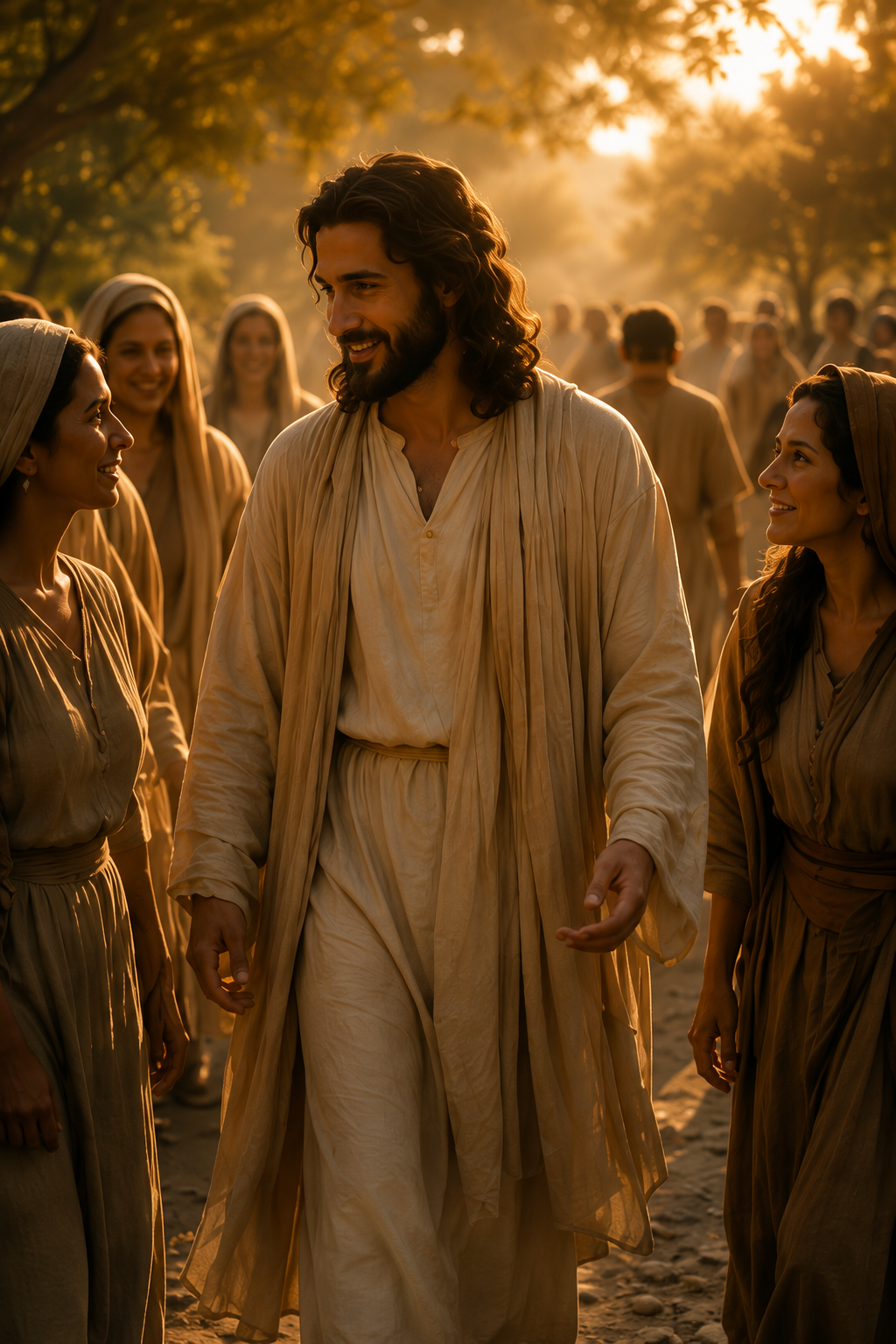
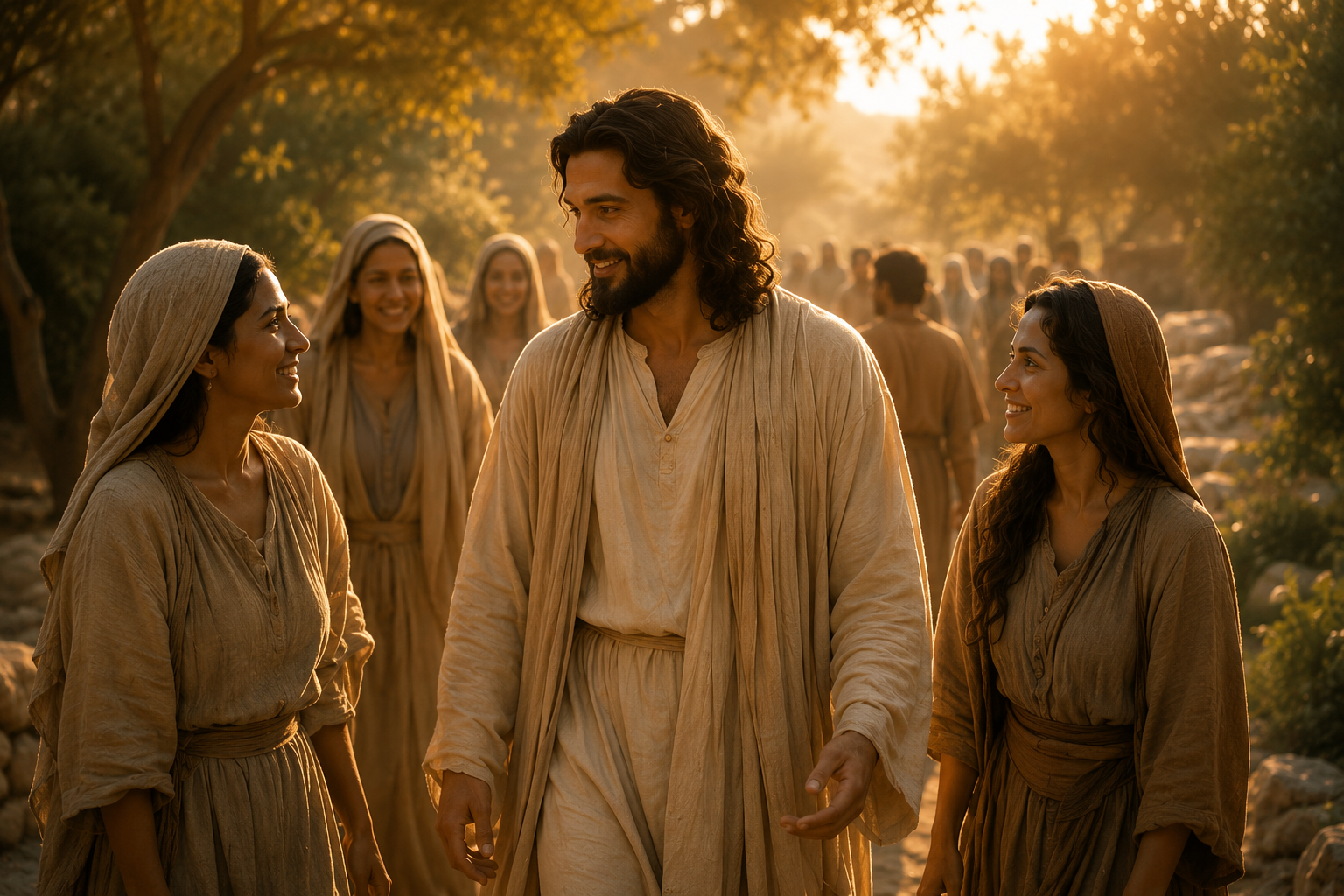
When Jesus enters the story, He does not merely heal women. He restores dignity. He gives back voice. He legitimizes discipleship. He reveals profound truths. He entrusts mission. Jesus does not invent a new worth for woman — He reveals the worth that had been in the Father's heart from the beginning. Four encounters show this clearly.
Jesus does not reinforce the fall. He restores the design.
Mark 5:25-34 · Luke 8:43-48
The woman with the issue of blood
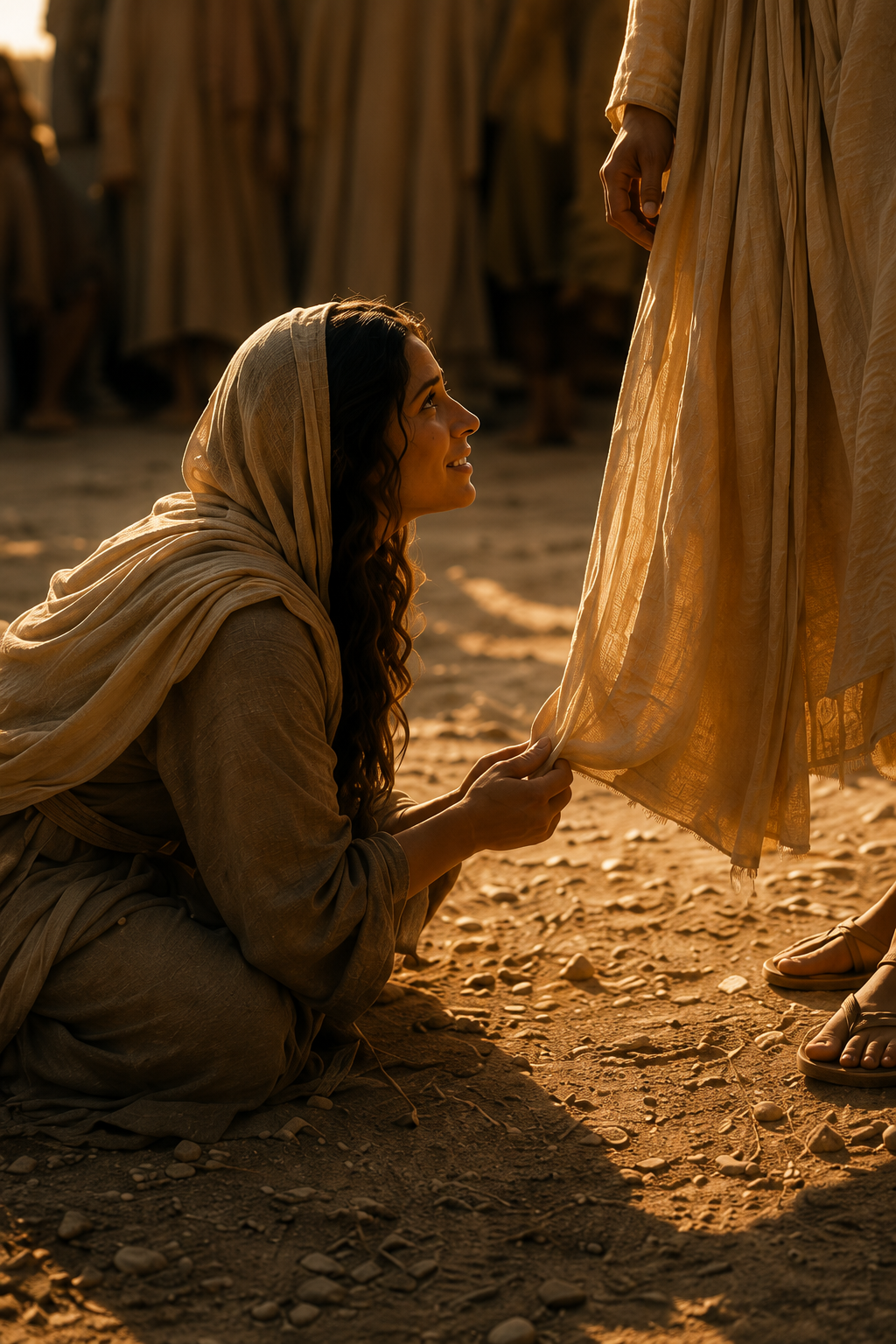
This woman appears in the Gospels as someone who had suffered for twelve years from continuous bleeding. Beyond the physical pain, her condition placed her in religious and social isolation, because, in that context, she was considered unclean for as long as the bleeding lasted. She reaches Jesus in the middle of the crowd, not wanting to draw attention, and touches the edge of His garment.
She is healed. But Jesus stops. He calls her in order to restore her publicly, lets her tell "the whole truth" and calls her daughter — one of the most tender words in the Gospels. Jesus gives her back her body, her voice and her belonging.
"She came hidden. She left recognized."
John 4:1-42
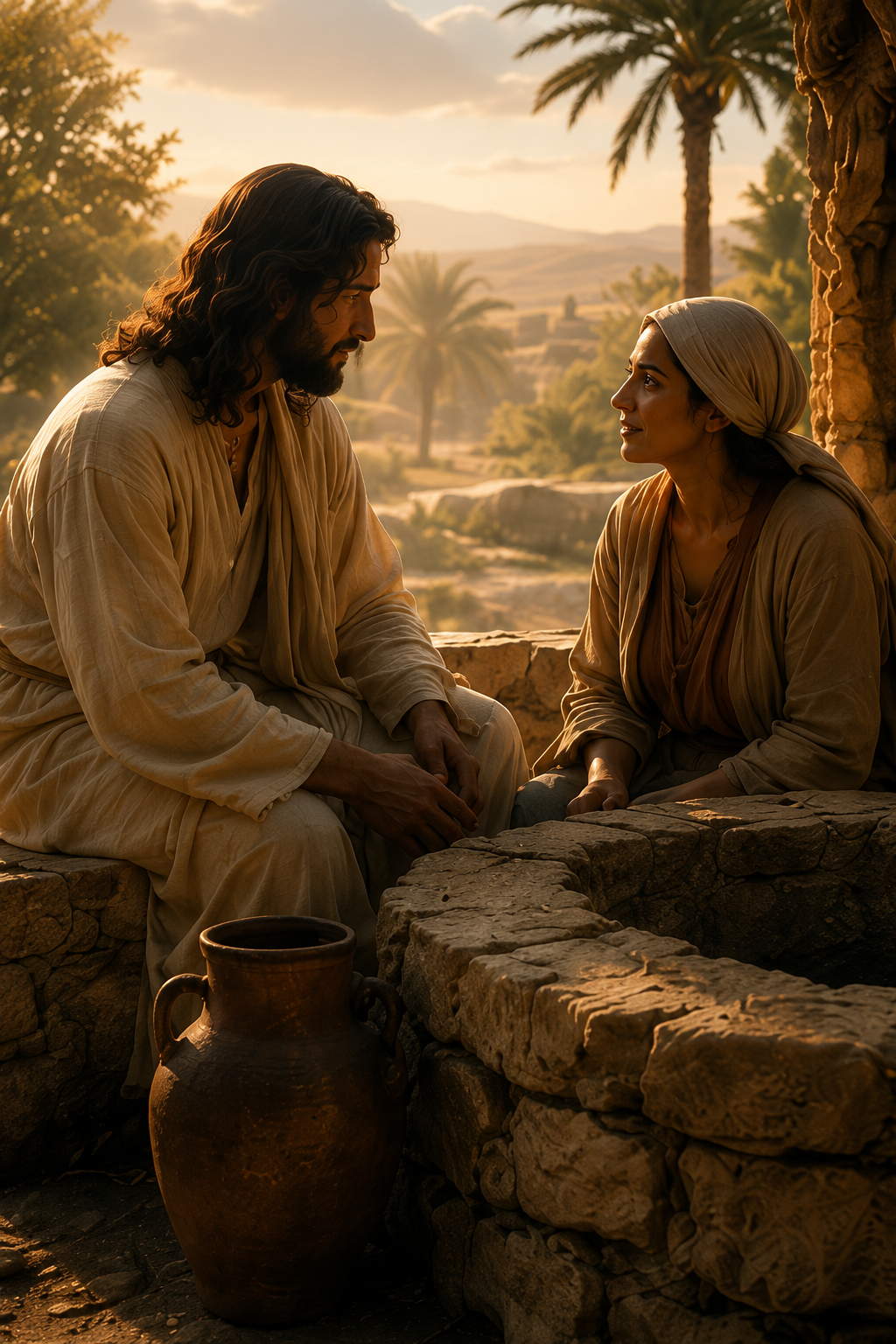
The Samaritan woman
The Samaritan woman was from Samaria, a people whose relationship with the Jews was marked by historical and religious tension. She also carried a complex relational history and goes to the well at an unusual hour, possibly to avoid encounters and judgment. It is in that place of thirst, routine and possible isolation that Jesus begins a conversation with her.
And it is to this woman — with layer upon layer of exclusion — that Jesus reveals Himself directly as the Messiah, in one of the most profound theological conversations in the Gospel of John. She leaves her water jar, goes back to the town and proclaims. Many believe "because of the woman's testimony". The one who was avoided becomes the one who is sent — a bridge to an entire town.
"Jesus knows your story, but He does not reduce you to your story."
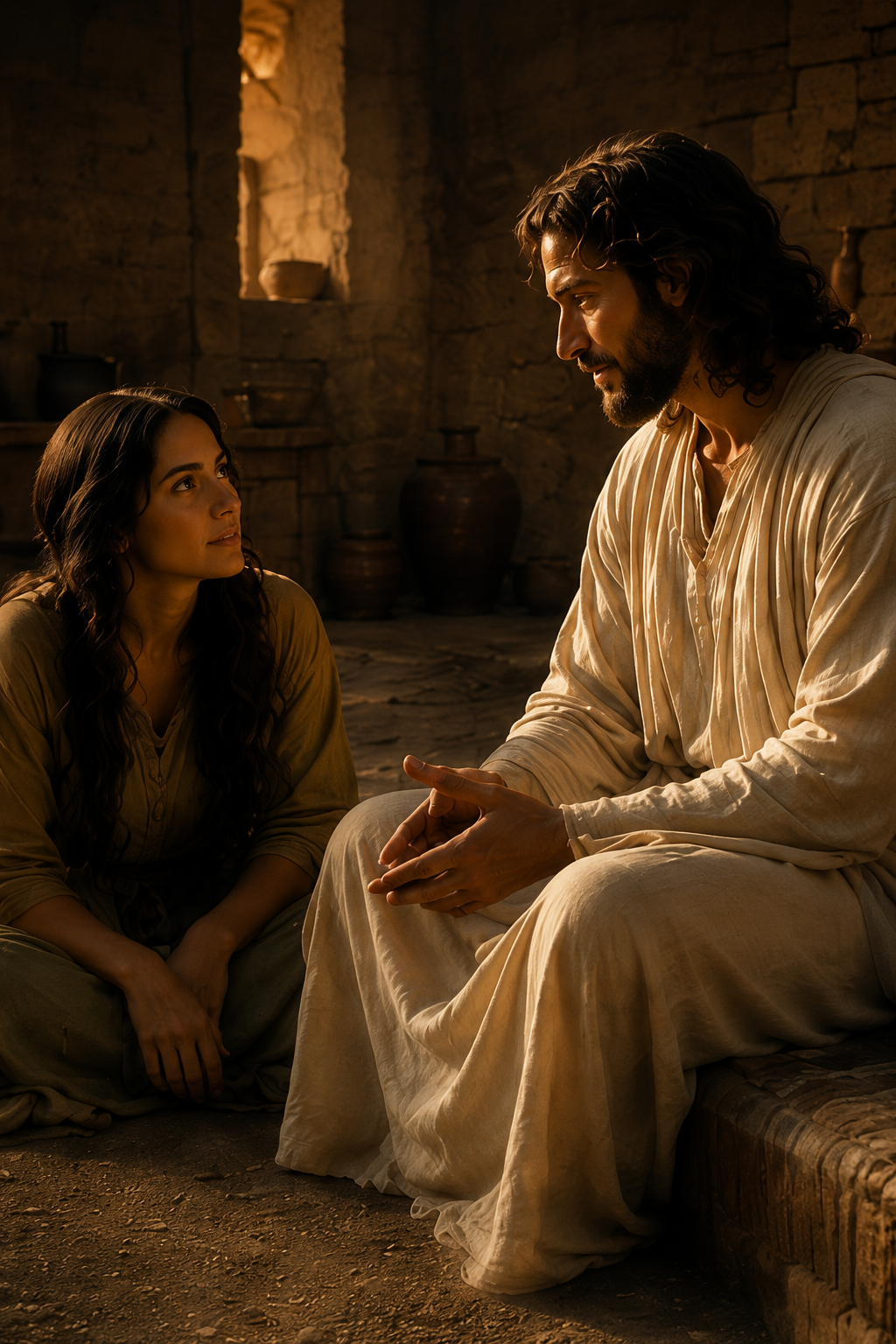
Luke 10:38-42
Mary of Bethany
Mary of Bethany was the sister of Martha and Lazarus. During one of Jesus' visits to the family's home, while Martha busied herself with serving, Mary chose to sit at Jesus' feet and listen to Him. Today that image may seem merely devotional, but in the context of the time, sitting at a teacher's feet was the position of a disciple — Paul uses the same expression about Gamaliel.
Mary is, therefore, in the place of a disciple. And when this is questioned, Jesus defends her: "Mary has chosen what is better." He does not send her back to the socially expected space. Before function comes formation. Before serving comes listening. Jesus legitimizes woman as disciple.
"Before doing things for Jesus, Mary is called to be with Jesus."
John 11:17-27
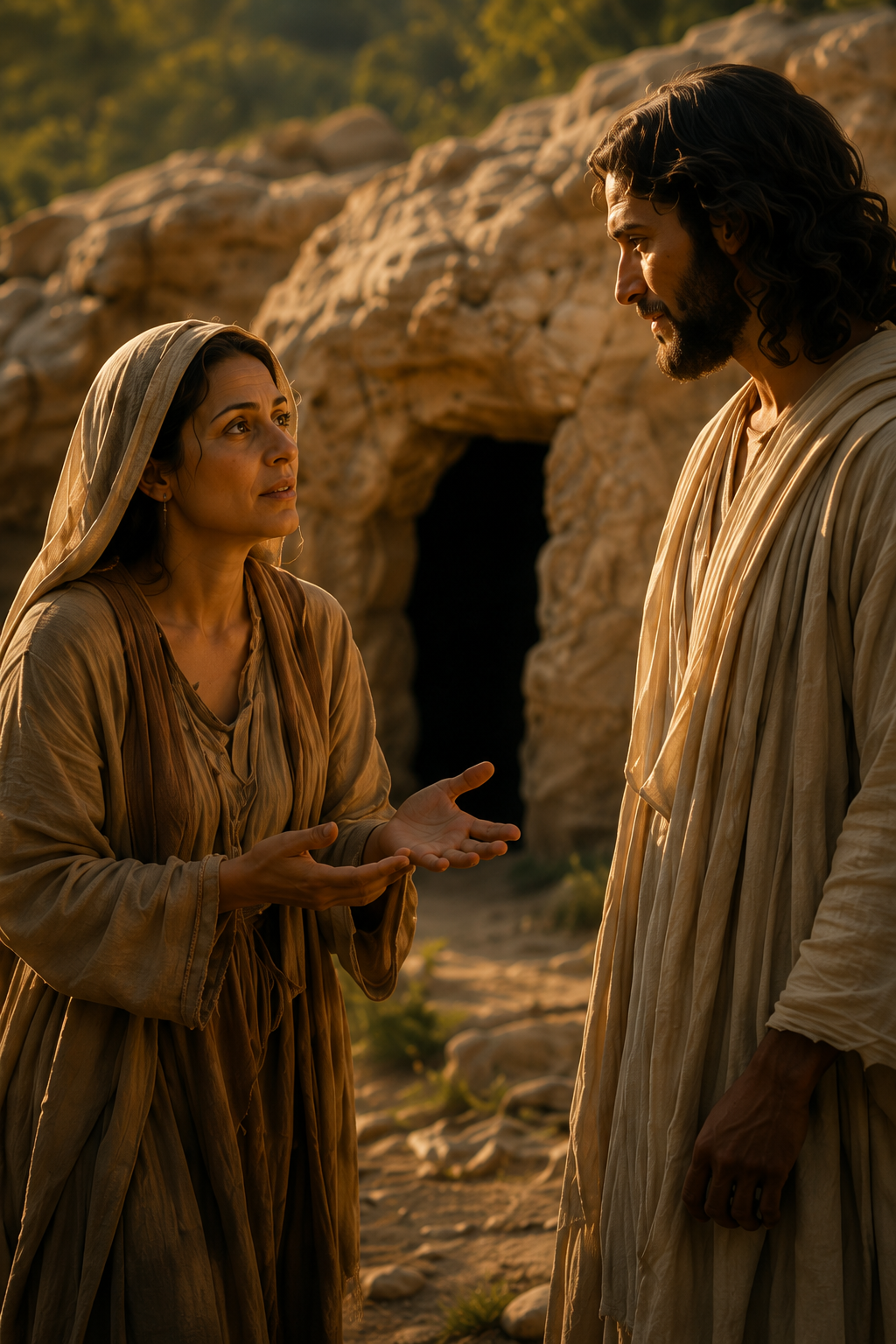
Martha at the tomb of Lazarus
Martha, sister of Mary and Lazarus, is often remembered only for the scene in which she was worried about household tasks. But John 11 shows us another dimension of her: facing her brother's death, Martha goes out to meet Jesus and sustains a deep conversation about faith, death and resurrection.
It is to her, grieving and full of questions, that Jesus entrusts one of the most profound declarations in the entire Gospel: "I am the resurrection and the life." And hers is one of the great confessions of faith in the New Testament: "You are the Messiah, the Son of God." Jesus gives back to woman the place of spiritual interlocutor.
"Jesus does not simplify revelation because He is speaking with a woman."
Part 4 · Mission
Mary Magdalene and the new creation
The Gospel does not stop at restoration. It moves forward into mission. And one of the most luminous scenes of that mission takes place at dawn on resurrection morning.
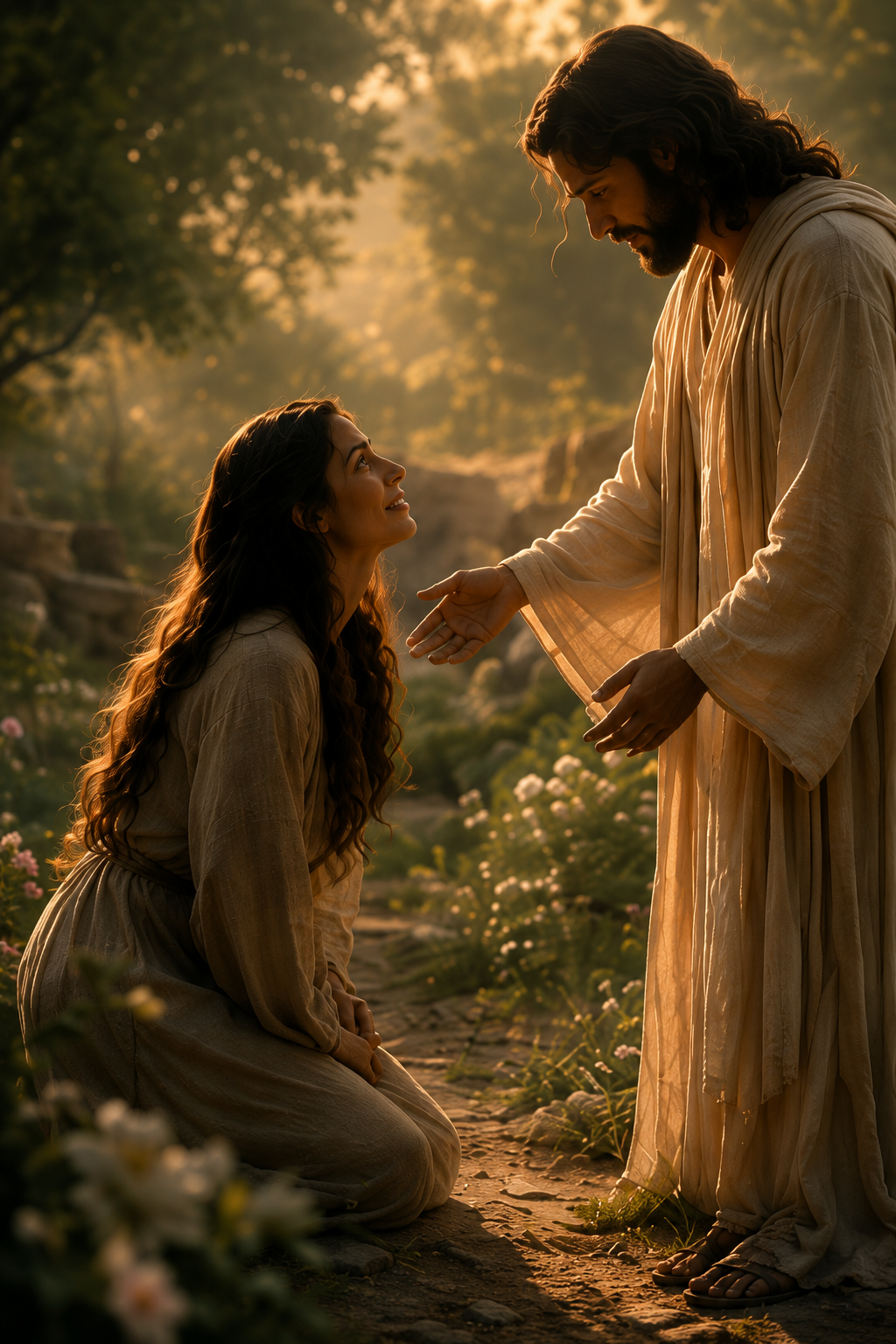
Mary Magdalene was a follower of Jesus. She was among the women who accompanied His ministry and, after the crucifixion, went to the tomb carrying her grief and her faithfulness. She does not go to the garden expecting to find a theological thesis. She goes weeping, looking for the body of Jesus.
And it is in that scene of mourning that the Risen One reveals Himself — to her. He could have appeared first to Peter, to John, to a priest, to a crowd. But He appears first to a woman, in a cultural context where a woman's testimony did not always carry the same weight. He calls her by name — "Mary!" (John 20:16) — and sends her: "Go instead to my brothers and tell them..." (John 20:17). That is why, throughout Christian history, some have called her the "apostle to the apostles".
"The greatest news in history was first announced by a woman."
The greatest news in history was entrusted first to a woman.
From the garden of the fall to the garden of the resurrection
There is a connection here that is no narrative coincidence — it is redemption. The story begins in a garden, where the woman takes part in the drama of the fall. And John 20 places us in another garden: Mary thinks Jesus is the gardener. In a way, He is — the gardener of the new creation.
In the first garden, there is fall, fear, shame and death. In the garden of the resurrection, there is a name, an encounter, a sending and life. In the first garden, the woman is caught up in a story of rupture. In the garden of the resurrection, a woman is sent to announce the victory over death. Sin tried to silence woman. The risen Jesus entrusts to a woman the first proclamation of the new creation.
"In the first garden, death enters. In the garden of the resurrection, death is defeated."
Two gardens, one story: what the fall wounded, the resurrection begins to restore.
Part 5 · Application
What happens when Ezer Kenegdo exists again?
First of all, an essential caution: being Ezer does not mean being exhausted. It does not mean living without limits, being invisible or carrying the world on your shoulders. Many women have become ill because they confused calling with overload — they were taught that to love was to disappear, that to serve was to erase themselves. But that is not God's design. The help a woman offers should not be born of exhaustion, but of communion. She was called to reflect the God who helps, while remaining dependent on God.
When this identity is restored, everyone gains — the woman, the man, the family, the church.
For women
Identity restored
She stops apologizing for existing with strength, stops believing her voice is a nuisance, stops confusing humility with invisibility — and begins to see herself through God's design, not through the distortions of the fall.
"Being Ezer does not mean taking God's place in everyone's life."
For men
Covenant recovered
He stops seeing woman as a threat and begins to receive her as a gift. He stops confusing leadership with control and stops reading feminine strength as an affront — and returns to valuing correspondence, wisdom and partnership.
"When a man recognizes Ezer Kenegdo, he does not lose authority. He recovers covenant."
For the church
Gifts recognized
Women stop being seen merely as a workforce and begin to be formed as disciples, witnesses, intercessors and teachers — a living part of the body of Christ, according to the gifts God has distributed.
"When the church recognizes Ezer Kenegdo, it draws closer to the heart of Jesus."
To reflect
Restoring the biblical vision of woman is not a cultural agenda. It is faithfulness to the text. It is teaching Genesis 2 before applying Genesis 3.
Silence and answer
Final questions
Who said your voice was small?
Who said your strength was a problem?
Who said your presence was secondary?
What name was placed on you that God never placed?
Who are the women God has placed in your life as help?
Have you been living out of God's design — or out of the distortions of the fall?
Do not answer quickly. Let each question find its place. Some answers are only born in silence before God.
The story does not end in the fall. It ends in a garden filled with light.
"At that moment in my life, I thought God would answer me by speaking only about me. But He took me to Genesis."
And there I discovered that, in order to understand a woman's pain, I first needed to understand a woman's design. And in order to understand a woman's design, I needed to see the heart of God.
Because woman was not an improvisation. She was designed as Ezer Kenegdo. Sin distorted that design. Jesus came to restore it. In Christ, Ezer Kenegdo is not a lost memory of Eden — it is a restored identity. Not to dominate. Not to compete. Not to carry everything alone. But to reflect the God who helps.
"When God designed woman, He revealed something of His own heart: the God who helps."
The Help of God.
When God designed woman.
Take this study further
Someone needs to hear this today
If this study touched something in you, share it with a woman who needs to remember the design — or with someone who needs to learn to see it again.
Download the complete study
Fill in your details to receive the complete material of "The Help of God — When God Designed Woman".
Your details will be used only to send this study and communications related to Priscila Abondanza's content.
By submitting this form, you agree to the use of your data to receive this study and related communications. Your data will never be sold or shared.